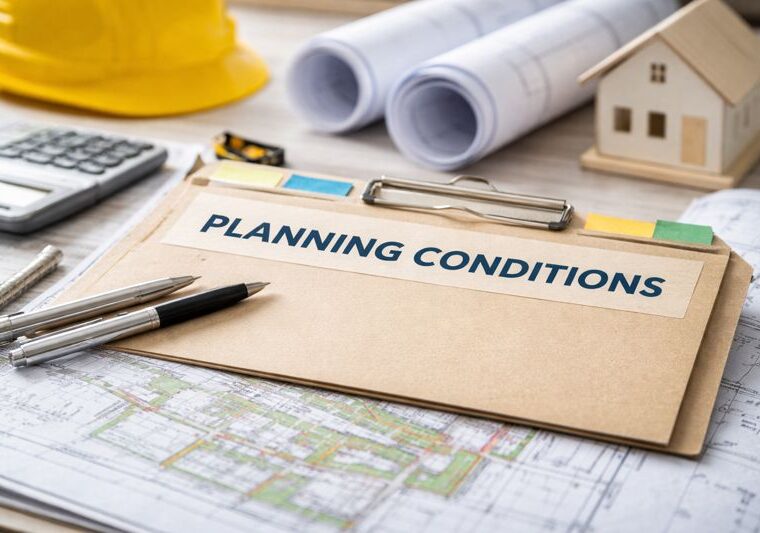


When Planning Conditions Collide with Construction Reality
Planning permission is often treated as a finish line.
On paper, the scheme is approved. The risk appears resolved. The programme moves on.
On site, however, the reality is very different.
In practice, many projects do not fail because planning permission was refused.
They stall, slip, or bleed cost because planning conditions collide with construction reality.
This is where most planning advice quietly stops — and where most project risk actually begins.
“Most planning risk does not sit in refusal — it sits in conditions that were never written with construction in mind.”
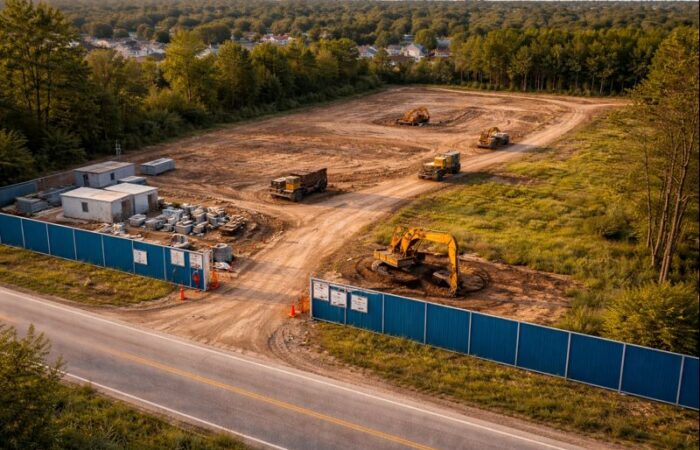
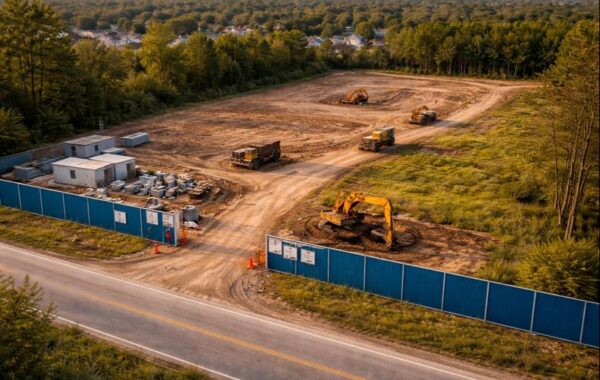
Access Is Often the Real Planning Constraint on Land
Planning Conditions Are Written in Isolation
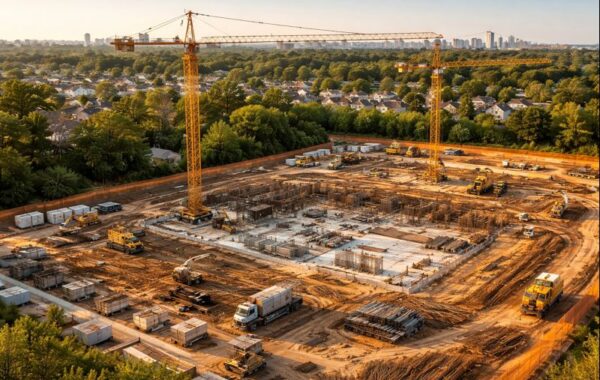
Construction Happens in Sequence
Planning conditions are rarely written with construction sequencing in mind.
They are often drafted:
- Before a buildable Stage 4 or 5 design exists
- Without a confirmed logistics strategy
- With limited understanding of programme pressure
- And with an assumption that compliance is linear
Construction, by contrast, is never linear.
Access, deliveries, temporary works, neighbour constraints, utilities, working hours, and weather all interact — often simultaneously.
A single condition that looks “reasonable” in isolation can become unworkable once placed inside a live programme.
This is not a failure of compliance.
It is a failure of interface
The Hidden Risk Is Not the Condition
It’s the Timing
Most problematic conditions are not controversial in principle.
They become problematic because of when they must be discharged.
Typical examples include:
- Construction Management Plans required prior to commencement, when contractor input is not yet final
- Materials approvals requested before procurement routes are agreed
- Access or delivery restrictions imposed without reference to site constraints
- Noise, dust, or traffic conditions that assume ideal working sequences
Once construction starts, these conditions are no longer planning problems.
They become programme risks.
At that point, the project is forced into reactive management: redesign, resubmission, negotiation, delay.
Approval Without Construction Readiness Is a False Win
A planning approval secured without construction readiness often feels like success — until site mobilisation begins.
Common symptoms include:
- “Approved” schemes that cannot be built as drawn
- Conditions that require information no one can realistically provide yet
- Consultants working in silos rather than as a coordinated delivery team
- Clients discovering post-approval that compliance costs were never priced
None of this shows up in the decision notice.
All of it shows up in the programme.
Where Planning Advice Usually Falls Short
Traditional planning advice tends to focus on:
- Policy compliance
- Visual acceptability
- Negotiation with the local authority
What is often missing is:
- Programme awareness
- Construction sequencing logic
- Logistics realism
- And condition wording that reflects how sites actually operate
This gap is not theoretical.
It is measured in weeks lost and costs absorbed.
Planning Needs to Be Read from the Site Backwards
The most robust planning strategies do not start with policy alone.
They start by asking:
- How will this actually be built?
- In what sequence?
- With what access?
- Under what constraints?
- And at what point will compliance realistically occur?
When planning is approached from the construction side, conditions stop being abstract requirements and start becoming manageable obligations.
The Real Question Is Not “Can We Get Permission?”
It’s “Can We Build What We’ve Approved?”
Planning permission that cannot transition cleanly into construction is not certainty.
It is deferred risk.
Projects succeed when planning decisions are shaped with delivery in mind — not when delivery is forced to adapt to decisions made in isolation.
That interface is where most projects quietly succeed or fail.
And it is where planning advice matters most.