

Access Is Often the Real Planning Constraint on Land
When assessing land for development, access is often treated as a technical detail.
Something to be resolved later.
Something that can be engineered.
In planning terms, this is a mistake.
For many sites, access is not a secondary issue.
It is the primary constraint — and sometimes the deciding one.
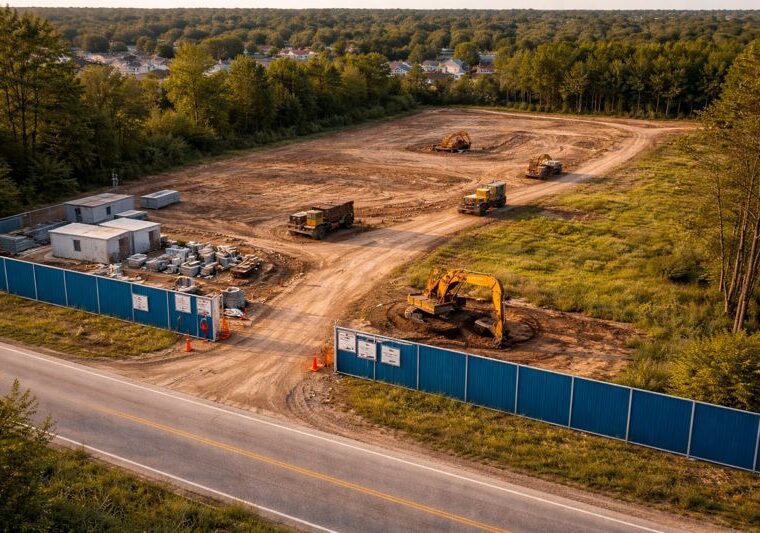
Access Is Often the Real Planning Constraint on Land
Access Is a Planning Issue Before It Is an Engineering One
From a landowner or developer perspective, access is often framed as a design or highways problem.
From a planning perspective, access is about acceptability.
It affects:
- Safety
- Neighbour impact
- Traffic movement
- Deliverability
- And long-term use of the site
If access is weak, uncertain, or controversial, the entire proposal becomes harder to justify — regardless of what can technically be built on the land.
“We Can Solve Access Later” Is a Risky Assumption
Many land deals progress on the assumption that access can be resolved post-approval.
In reality, planning authorities are cautious where:
- Access relies on third-party land
- Visibility splays are marginal
- Existing routes are substandard
- Or access arrangements require future agreements
If access is not credible at planning stage, it introduces doubt.
And doubt is rarely your ally in planning.
Access Shapes How a Site Is Perceived
Two sites of similar size and policy context can be assessed very differently depending on access.
A clear, safe, and legible access arrangement gives confidence that:
- The development is manageable
- Impacts are understood
- And future users can operate safely
A compromised access arrangement does the opposite.
It frames the site as constrained, sensitive, or risky — even before design quality is discussed.
Access Is Often Where Objections Gain Traction
Community objections frequently focus on access.
Not because access is always the biggest impact — but because it is the most tangible one.
Traffic, safety, noise, and disruption are all experienced through access.
Where access is unclear or contested, objections become easier to sustain and harder to dismiss.
Where access is robust, objections often lose their planning weight.
Planning Decisions Look Forward
Planning authorities do not just assess whether access works today.
They assess whether it will:
- Function safely over time
- Accommodate future use
- Remain acceptable as conditions change
This forward-looking assessment means access needs to be:
- Justifiable
- Defensible
- And resilient
Temporary or overly optimistic assumptions rarely survive scrutiny.
Good Access Reduces the Burden on the Rest of the Scheme
When access is strong:
- Highway concerns reduce
- Objections carry less weight
- Conditions become simpler
- And officer confidence increases
This does not guarantee approval — but it removes one of the most common reasons for hesitation.
The Real Question Is Not “Is Access Possible?”
It’s “Is Access Convincing?”
In planning, technical possibility is not enough.
What matters is whether access:
- Makes sense in context
- Feels safe and appropriate
- And supports the case for development
Land that looks developable on paper can become unviable if access is treated as an afterthought.
Conclusion
Access is rarely just a detail.
For land-led planning applications, it often defines whether a proposal is seen as credible or risky.
Strong access does not guarantee permission.
Weak access, however, often explains why permission was never granted.
Understanding that difference early is what separates viable land from problematic land.