



Why Poorly Written Planning Conditions Delay Projects
Planning conditions are often treated as neutral technical requirements.
In reality, they are one of the most common causes of programme slippage after approval.
Not because they exist — but because they are poorly written, poorly timed, and poorly aligned with delivery.
Most delays attributed to “planning” do not come from refusal or appeal.
They come from conditions that look harmless on paper and become restrictive once construction begins.
“Poorly written conditions don’t stop approval. They stop progress.”
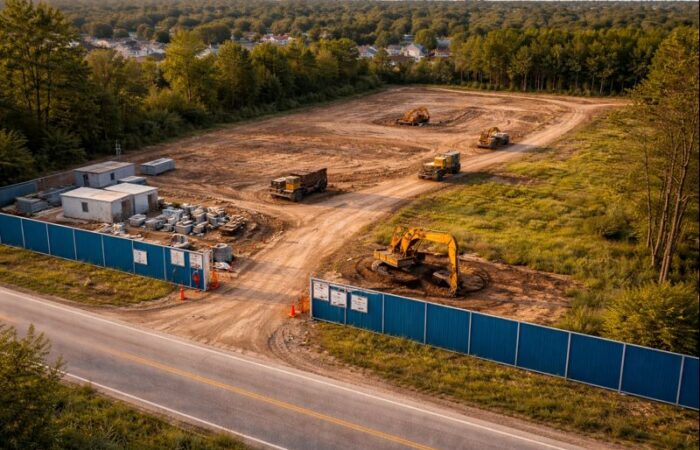
Access Is Often the Real Planning Constraint on Land
Conditions Rarely Fail in Principle
They Fail in Practice
Very few planning conditions are unreasonable in isolation.
They usually aim to:
- Protect neighbours
- Control impacts
- Secure quality
- Manage risk
The problem is not what they ask for.
The problem is how and when they ask for it.
Conditions are often drafted without:
- A confirmed construction sequence
- Contractor input
- Procurement strategy
- Or a realistic understanding of site constraints
Once the project moves into delivery, those gaps surface immediately.
Programme Delay Is Baked In at Drafting Stage
By the time a project reaches site, the damage is usually already done.
Common red flags include:
- Conditions requiring full technical detail before mobilisation
- Vague wording that triggers repeated resubmissions
- Overlapping conditions that contradict one another
- “Prior to commencement” requirements with no practical path to discharge
None of these stop a permission from being granted.
All of them stop a project from moving forward efficiently.
At that point, delays are no longer planning issues — they are management and coordination failures inherited from the consent.
The Cost of Ambiguity
Poorly written conditions rarely cause immediate refusal.
They cause uncertainty.
And uncertainty is what slows projects down.
When wording is unclear:
- Teams hesitate to proceed
- Councils interpret conservatively
- Consultants default to over-compliance
- Programmes pad contingency
- And cost quietly increases
This is not visible in the decision notice.
It only becomes obvious when the clock is already running.
Conditions Are Not Admin Tasks
They Are Programme Constraints
Treating condition discharge as a post-approval admin exercise is a mistake.
Each condition has:
- A timing implication
- A coordination requirement
- A dependency on other disciplines
- If these are not mapped early, conditions turn into blockers rather than controls.
Projects that move smoothly are not those with fewer conditions.
They are those where conditions were written, interpreted, and sequenced with delivery in mind.
Better Conditions Do Not Mean Weaker Control
There is a common misconception that challenging condition wording weakens planning control.
In reality, the opposite is true.
Clear, precise, and deliverable conditions:
- Reduce negotiation later
- Improve compliance
- Shorten discharge timelines
- And protect both the authority and the project
Strong planning outcomes depend on clarity, not rigidity.
The Question Is Not “Can We Discharge This?”
It’s “When, and at What Cost?”
By the time a project is delayed by conditions, the conversation is already late.
The real work happens earlier:
- During drafting
- During negotiation
- And during the alignment of planning advice with construction logic
That is where programme certainty is created — or quietly lost.
Conclusion
Planning conditions rarely delay projects because they are strict.
They delay projects because they are disconnected from how construction actually works.
Good planning advice does not stop at approval.
It anticipates how conditions will behave once delivery begins.
That is where most time is saved — and most risk is avoided.